



Ordering the wrong part for a Caterpillar machine usually comes down to one thing: a part number that wasn't verified before the order went in. This guide covers how caterpillar part number systems work, where to find the numbers on your machine, and how to order the right caterpillar spare parts the first time, whether you're buying genuine CAT stock or a compatible aftermarket equivalent.
Caterpillar builds excavators, dozers and motor graders that stay in service for decades, and a single model can carry several generations of part numbers across its production run. Getting the number right matters more than getting the part name right, since two visually identical components can carry different numbers depending on the machine's exact configuration and build date. This matters even more in a market like India, where Caterpillar machines from several different production eras often work side by side on the same mining or infrastructure site.
1. Understanding Caterpillar Part Numbers
A caterpillar part number typically follows one of two formats still in active use today. Older and newer CAT stock both circulate on working sites, often on machines built decades apart.
| Format | Structure | Example |
|---|---|---|
| Older CAT format | Two-character alphanumeric prefix + four digits | 6Y-6412, 9W-7120 |
| Newer CAT format | Three-digit numeric prefix + dash + four digits | 120-5746, 121-0140 |
A part number also encodes more than most buyers realise. Revisions, superseded versions, and even small material or tolerance changes can sit behind what looks like a single, unchanging number. The same physical part can be listed under more than one number if it was reissued, and one number can sometimes cover a small family of related components.
When ordering caterpillar parts from any supplier, quoting the exact number from your existing part removes almost all of the ambiguity from the order.
2. Finding Your Machine's Details Before You Order
Before you can order caterpillar replacement parts with confidence, you need three pieces of information from the machine itself.
- The exact model, including any suffix or series letter shown on the machine
- The full serial number, sometimes called the PIN
- The part number from the existing component, if it's still legible
On most excavators and dozers, the serial number plate is inside the operator's cab. On some dozer models it's also stamped on the main frame near the rear. The full serial number tells a supplier exactly which production configuration your machine left the factory with, which matters because Caterpillar's internal design changes within a model line aren't always visible from the outside.
Recording this information once, along with a photo of the existing part, saves considerable time on every future order.
3. Common Caterpillar Excavator and Dozer Parts
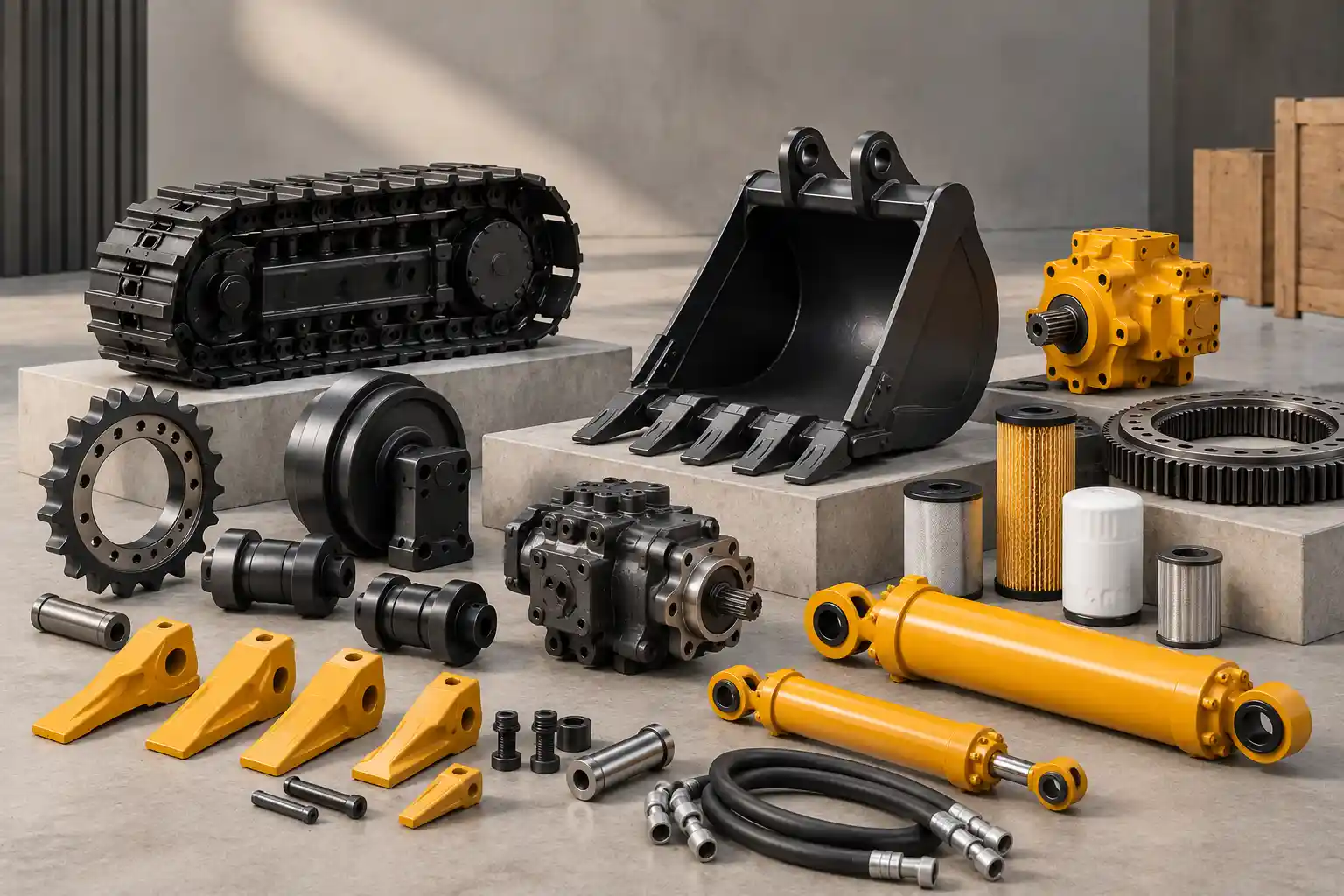
Undercarriage components make up a large share of the caterpillar parts ordered across CAT's excavator and dozer range, since these carry the most continuous load and abrasive wear on the machine. Tuffex currently stocks compatible undercarriage parts across the following CAT machines:
- Excavators: 320, 320D, 336D, 320D L, 330, 336, 336D, 336F
- Dozers: D6, D6R, D8N, D8R
- Motor graders: 12H, 14H, 120H, 140G
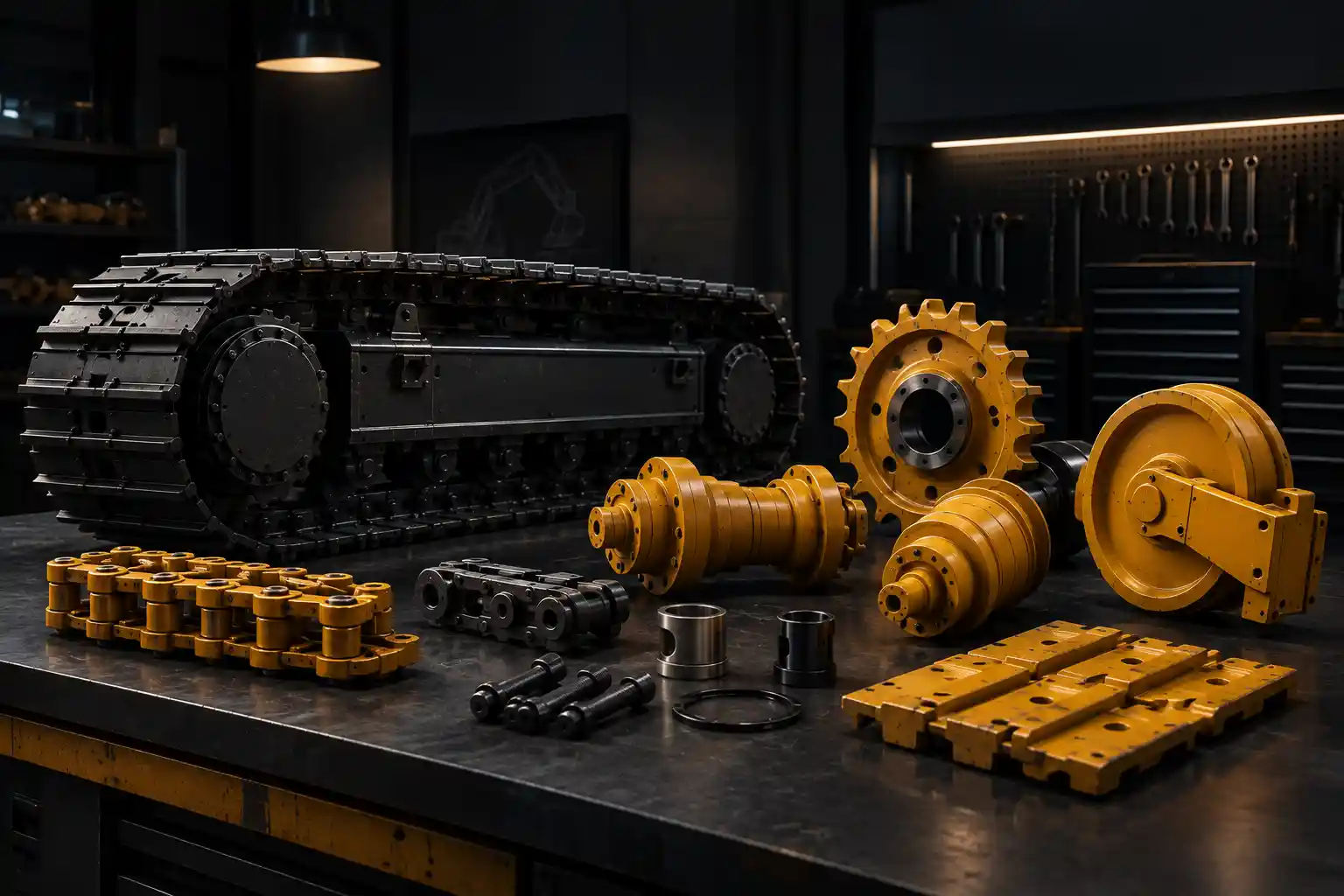
Track rollers, carrier rollers, idler assemblies, sprockets and track link assemblies are all specified by exact dimensions and fitment against a particular model. If you're sourcing parts for an excavator CAT model in this range, the undercarriage is very often the starting point, since it accounts for the largest share of a tracked machine's lifetime maintenance cost. That's true whether the machine is a compact 320 working a construction site or a larger 336D on a quarry job, since both carry the same wear-driven undercarriage economics.
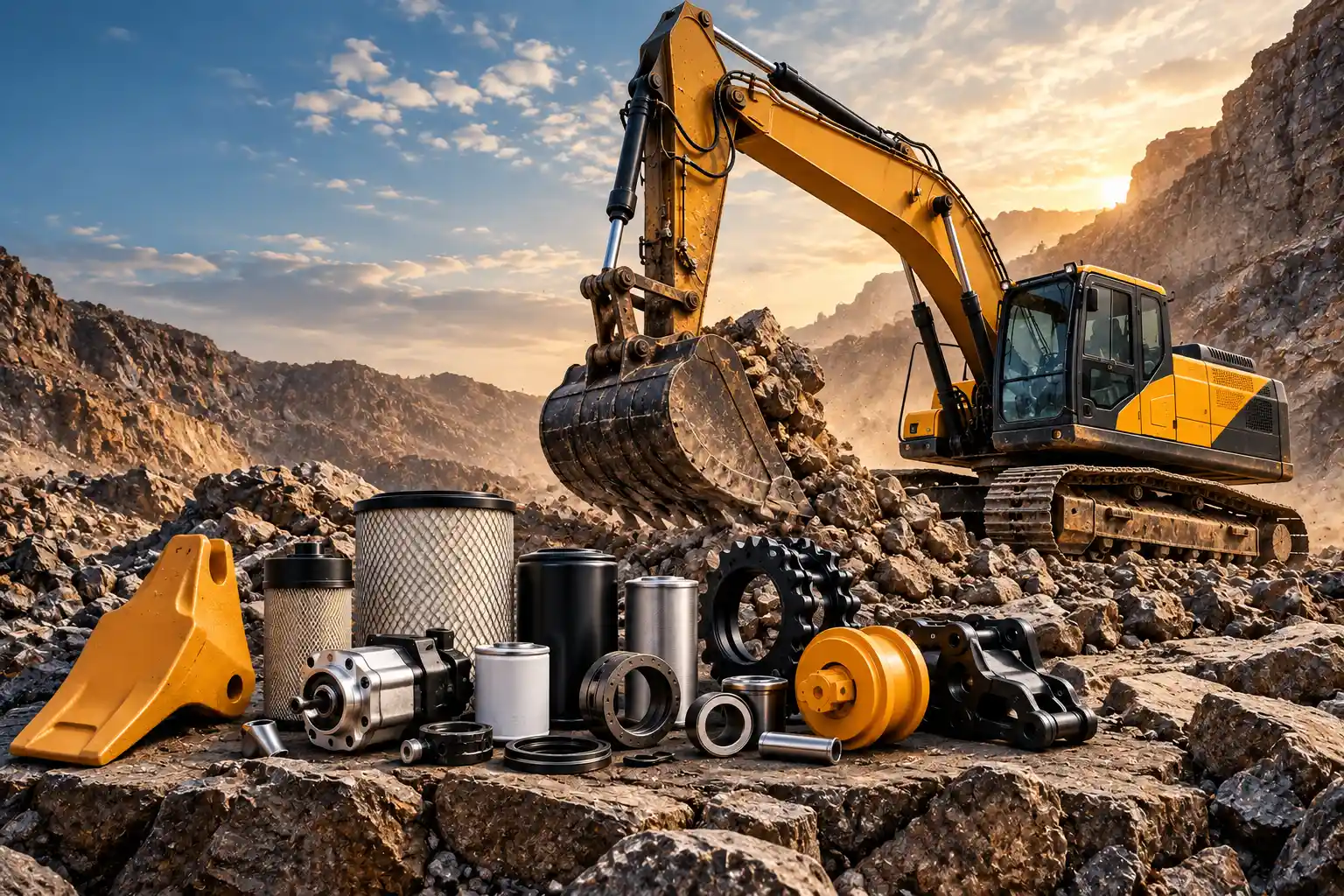
Bucket teeth, cutting edges and other ground engaging tools round out the rest of the commonly ordered caterpillar parts list. These wear fastest of anything on the machine and are designed to be replaced on a regular cycle rather than repaired, which also makes them the highest-frequency reorder across a fleet's caterpillar parts spend.
4. OEM vs. Aftermarket Caterpillar Replacement Parts
Buyers sourcing caterpillar replacement parts are generally choosing between genuine CAT parts and aftermarket alternatives, which themselves split into two tiers.
| Option | What it means | Best suited to |
|---|---|---|
| Genuine CAT (OEM) | Sold through the CAT dealer network at factory specification | Warranty-covered machines, safety-critical parts |
| Premium aftermarket | Engineered to OEM-equivalent tolerances (e.g. Berco, ITM) | Fleets wanting near-OEM life at a lower cost |
| Value aftermarket | Lower price point, shorter but serviceable working life | High-hour fleets optimising cost per operating hour |
None of these options is automatically the right call for every situation. The choice depends on the machine's age, how long it's expected to stay in service, and how the fleet manages its maintenance budget. Whichever tier you choose, the part number and machine specification still need to match exactly; brand tier affects price and expected service life, not the fitment requirement.
5. How to Order the Right Caterpillar Spare Parts
- Confirm the machine's exact model and serial number before contacting a supplier
- Quote the existing part's number if it's still legible
- Note the specific dimensions or specifications of the component being replaced
- Ask for a physical dimension check if the part number is missing or unreadable
- Confirm warranty terms and expected delivery timelines as part of the order
Site downtime is usually the real cost behind any parts decision on a working machine, which is why confirming these details up front matters more than the price on the quote. For fleets running several Caterpillar machines, keeping a simple record of each machine's model, serial number and recent part orders in one place makes every future order faster.
Frequently Asked Questions
- What does a Caterpillar part number look like?
- Caterpillar part numbers appear in two common formats: an older two-character alphanumeric prefix followed by four digits, such as 6Y-6412, and a newer all-numeric format with a three-digit prefix, a dash, and four more digits, such as 120-5746.
- Where do I find the serial number on my CAT machine?
- On most excavators and dozers, the serial number plate is inside the operator's cab. On some dozer models it's also stamped on the main frame near the rear of the machine.
- Are aftermarket Caterpillar parts as reliable as genuine CAT parts?
- It depends on the tier. Premium aftermarket brands are built to OEM-equivalent tolerances, while value-tier aftermarket parts trade some service life for a lower price, which suits fleets prioritising cost per operating hour.
- Can one Caterpillar part number fit more than one machine model?
- Yes. Caterpillar parts are often shared across related models or generations within the same product line, which is why confirming the exact number, rather than relying on the machine name alone, is the safest way to order.